POST #2
CALL IN LANGUAGE EDUCATION
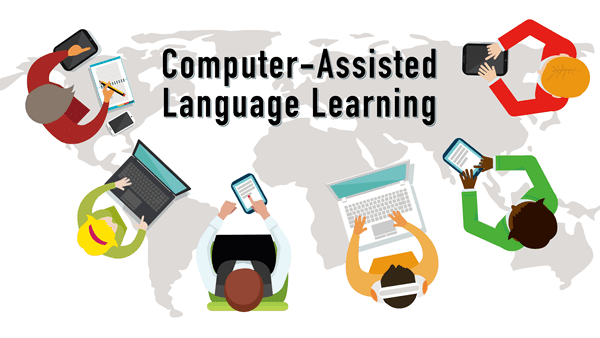
Benefits
- Interest and motivation.
- A compatible learning style.
- Immediate feedback.
- Individualization.
- Optimal use of learning time.
- Error analysis.
- Guided and repetitive practice.
- Pre-determined to process syllabus.
Disadvantages
- Less-handy equipment.
- Increased educational costs.
- Lack of trained teachers.
- Imperfect current CALL programs.
- Inability to handle unexpected situations.
Limitations of CALL materials
- Slow access.
- Server complications.
- Technophobic students and/or teachers.
CALL Stages
CALL is determined by three stages with specific aspects each.
- The first stage: The behaviouristic.
- Based on the Grammar-Translation and Audio-Lingual approaches. Thus, it had a structural view of language.
- It employed mainframes as its technology resource for habit formation, such as repetitive drills, drill-and-practice, and translation tests.
- The role of the teacher during this stage was to give instructions.
- The second stage: The communicative.
- Based on the Communicative Language Teaching approach. Thus, it had a mentally-constructed view of language.
- It employed PCs as its technology resource for communicative exercises, such as using forms, implicit grammar teaching forms, text reconstruction, and simulations.
- The role of the teacher during this stage was to be an activator and facilitator.
- The third stage: The integrative.
- Based on the Communicative Language Teaching approach. Thus, it had a mentally-constructed view of language.
- It employed PCs as its technology resource for communicative exercises, such as using forms, implicit grammar teaching forms, text reconstruction, and simulations.
- The role of the teacher during this stage was to be an activator and facilitator.
- It is based on the Content-Based, Task-Based, Project-Based, ESP, and EAP approaches. Thus, it has a social and social-cognitive view of language.
- It employs multimedia and internet-based applications as its technology resources for authentic social and context discourses and integrates the four skills (reading, writing, listening, and speaking.)
- The role of the teacher in this stage is to be a counselor and a mentor.
- It is based on the Content-Based, Task-Based, Project-Based, ESP, and EAP approaches. Thus, it has a social and social-cognitive view of language.
- It employs multimedia and internet-based applications as its technology resources for authentic social and context discourses and integrates the four skills (reading, writing, listening, and speaking.)
- The role of the teacher in this stage is to be a counselor and a mentor.
CALL Evaluation
CALL evaluation refers to the assessment and examination of computer-based tools and resources used for language learning purposes. It involves evaluating the effectiveness, usability, and appropriateness of various software, applications, and digital materials in supporting language acquisition and instruction.
McMurry et al. (2016) suggest some possible CALL applications for evaluation in the following image.

In my opinion, using CALL in education has many advantages, such as promoting language skills through interactive conversations, flexible learning, personalized instruction, boost collaboration, access to ifferent multimedia resources, and supports teacher professional development.
ReplyDelete